
Sounio
sacred cape of the Athenians
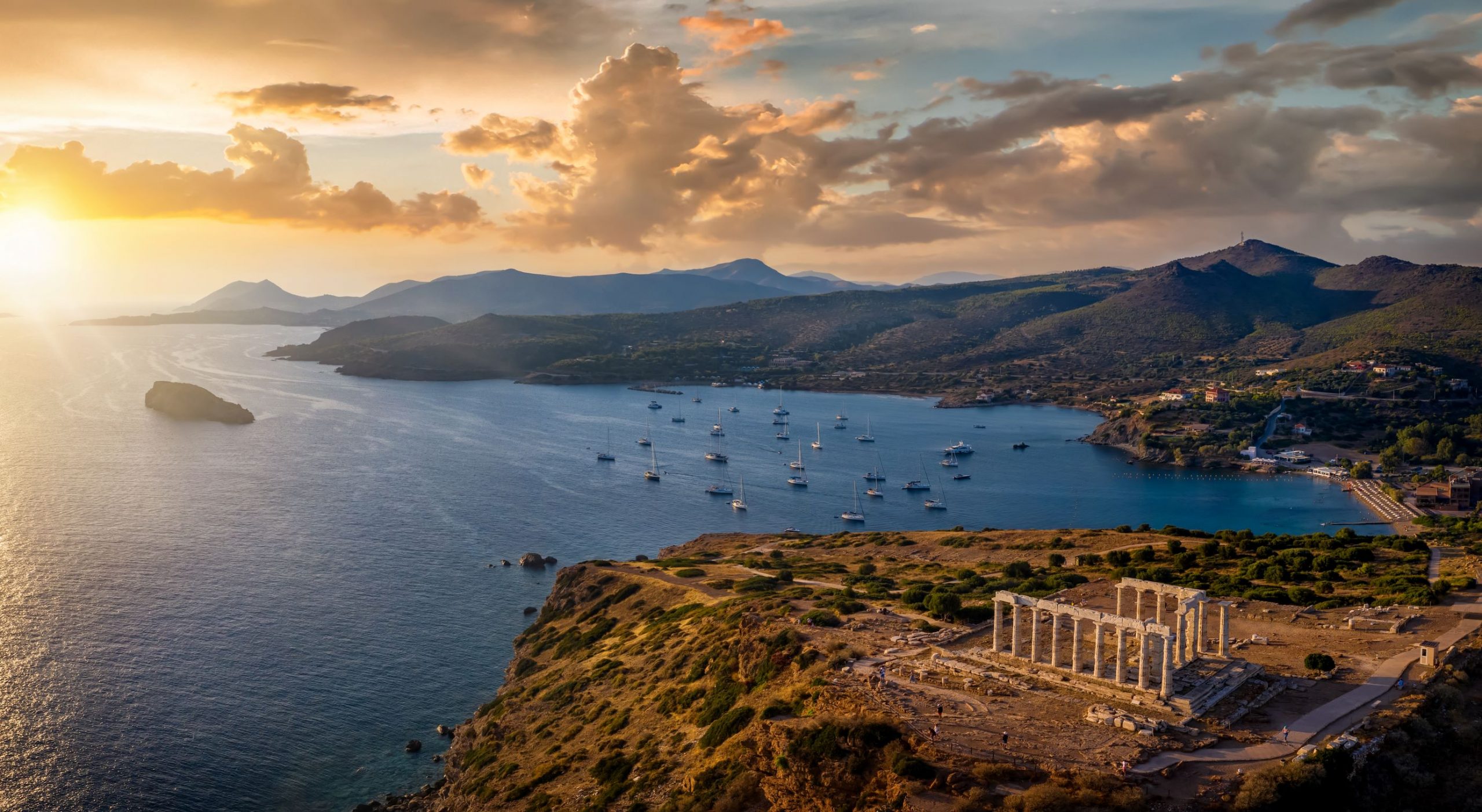
Crystal clear blue waters of the Saronic Gulf and the imposing Temple of Poseidon
At the most southern part of Attica
At a really close distance to Athens, the temple of Poseidon, the legendary god of the Seas, continues to attract the interest of visitors for its history, as well as for its astonishing breathtaking beauty.
Its combination of the crystal clear blue waters of the Saronic Gulf with the imposing Temple of Poseidon dominating the horizon leaves as no wonder that Sounio has been a major symbol of the Greek heritage for centuries.
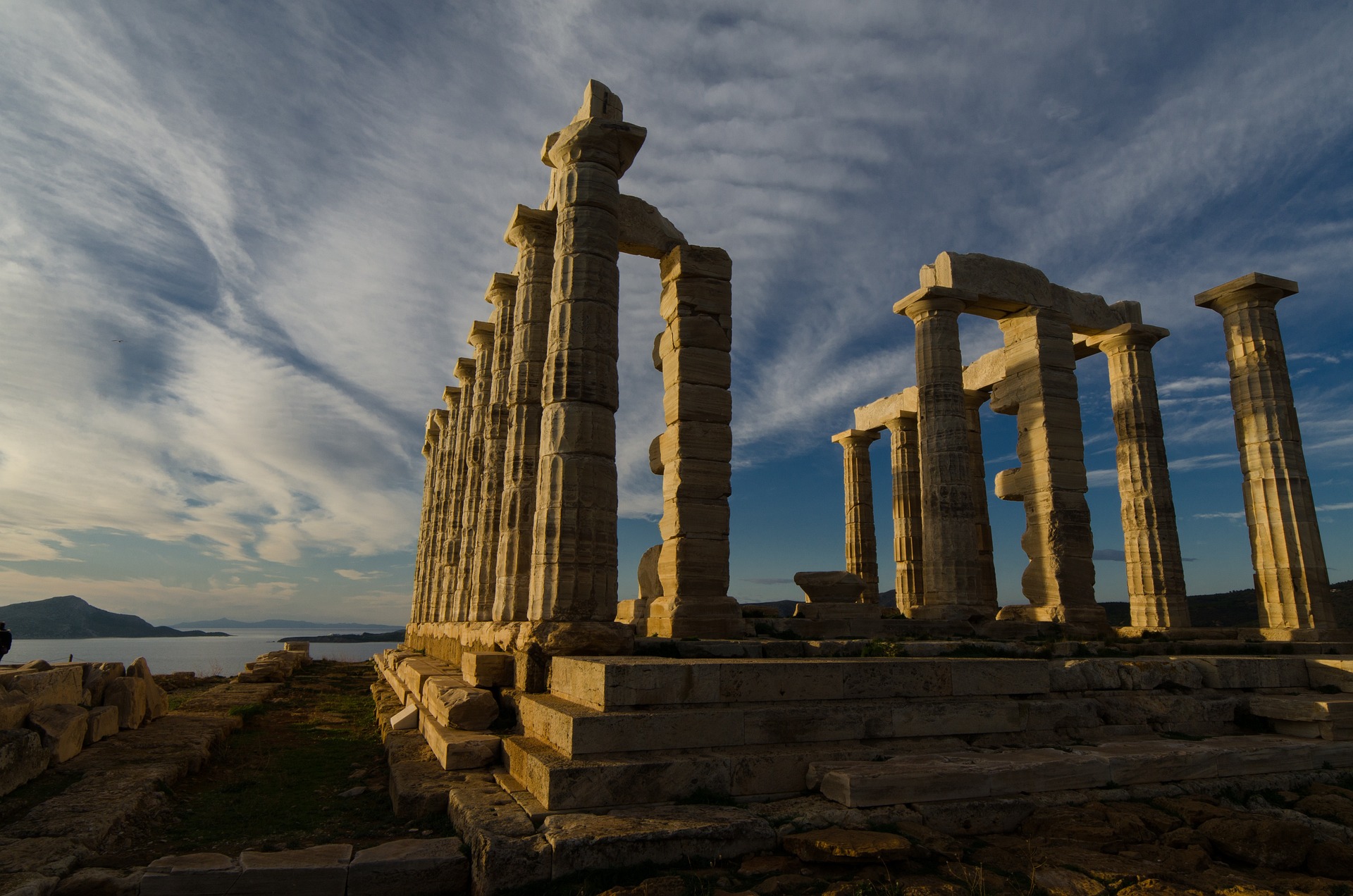
The Temple of Poseidon
Built in 444–440 BC. during the time of Pericles, the famous politician who also reconstructed the Parthenon of Athens. Actually, it seems that the temple has been built on the ruins of a temple dating back to the archaic period.
The ancient Greeks, especially sailors, believed that storms were signs of Poseidon’s wrath, so the temple at Cape Sounion was a place where animal sacrifices and other gifts from sailors and the general public were offered to appease him and win his favor. It was a sacred place to serve.
Build
Distance from Athens
Elevation
The Sacred cape of the Athenians
Sounio is first mentioned by Homer in his”Odyssey”, where he describes it as the “sacred cape of the Athenians”. Moreover, it is also mentioned that it was there that Menelaus, while returning from Troy, stopped to bury Frontis, the helmsman of his ship.
In later years, the Rock of Sounio has been the source of inspiration for the English poet Lord Byron, one of the most brilliant figures of Romanticism, who carved his name on one of the Temple’s columns. It was actually there, in Sounio, where he drew the inspiration for his poem “The isles of Greece”.

Sounio-Temple of Poseidon
Sounio
Sounio-Temple of Poseidon

Sounio-Temple of Poseidon
“The isles of Greece”
by Lord Byron
…….
Place me on Sunium’s marbled steep,
Where nothing, save the waves and I,
May hear our mutual murmurs sweep;
There, swan-like, let me sing and die:
A land of slaves shall ne’er be mine —
Dash down yon cup of Samian wine!
…….