Mycenae
At the legendary kingdom of Agamemnon…
“Rich in gold”
Mycenae “rich in gold”, the kingdom of legendary Agamemnon, constitutes the most important and the wealthiest palatial center of the Late Bronze Age in Greece. According to mythology, the founder of Mycenae was Perseus, son of Zeus and Danae. When it comes to its name, it is said that Perseus named the new city that way, either because the fungus (“myce”) of his sword fell there, or because a spring with abundant water was revealed there, under the root of a “fungus”, i.e. a mushroom.
Built between two high conical hills, Mycenae controlled the sea and road communications with a natural fortification. Mycenae flourished between 1350
and 1200 BC. with a rapid development.
A unique journey
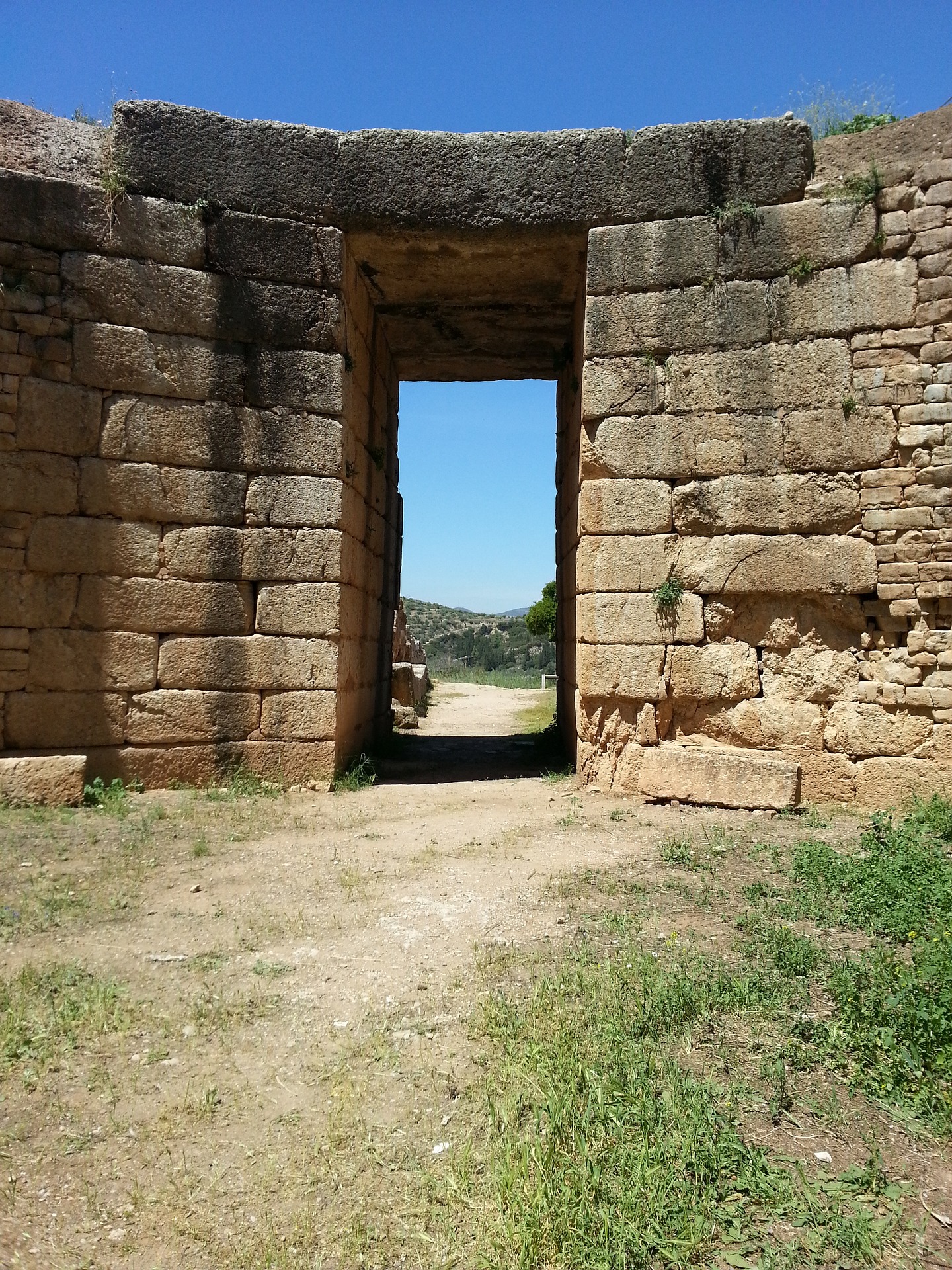
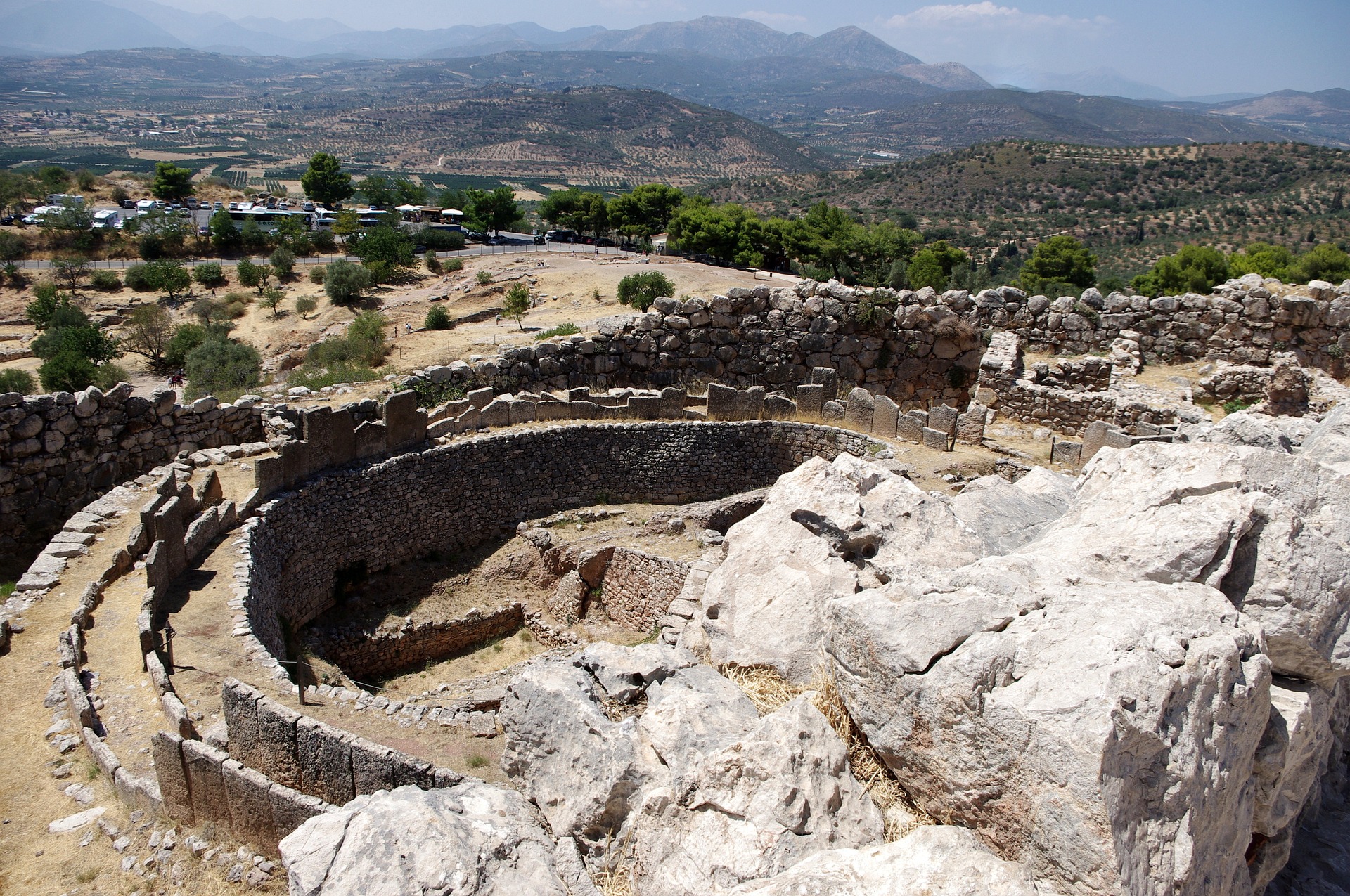
Palace complexes, the well-known “Tomb of Atreus”, the Cyclopean walls, fountains and bastions constitute one of the most important and largest architectural complexes known to the ancient world. Mycenae offers a unique journey into the past and the Bronze Age through the tour of the archaeological site that, through the excavations of Heinrich Schliemann in 1876, confirmed the stories and myths sung by Homer and Virgil about the splendor of the history of the Mycenaean civilization.
The abundance of archaeological findings dominating the area, such as the beehive tomb of Atreus, the underground reservoir, the religious center, the Cyclopean Walls, the oil merchant’s quarter, the Lions’ Gate and the Second Burial Circle, awe with their magnificence and their indelible beauty that remains imperishable over time…
Distance from Athens
Built above sea level
Peak period
Mycenae